opening of the story
Nyia’s Contented Routine
Nya Crosland spent a ordinary spring, grateful for her living father, son [Trey](entity:character-recall-character-trey-4bb5c11306ea), and her beloved job at [Chantel Fifty](entity:location-recall-location-chantel-fifty-34841a30f555) restaurant. She bought spring clothes and shoes, enjoyed the seasonal decorations in the mall, and measured her simple life by the stability and family love it provided
eight years before the main action
The College Romance
At the University of [North Carolina](entity:location-recall-location-7dab908d4fe3) Central, [Nyia Crosland](entity:character-recall-character-nyia-crosland-676fc108a623) studied nursing when she met [Daeshim](entity:character-recall-character-daeshim-6ef07abf5b8d), who was studying forensic science. Their chance meeting quickly developed into a passionate romance, filled with shared outings, private family-like happiness, and an indissoluble sexual relationship between them
eight years before the main action
The Family Ultimatum
[Daeshim](entity:character-recall-character-daeshim-6ef07abf5b8d)'s parents refused to accept their relationship because Nyia is black rather than Korean-American. Korean traditional family values became a coercive force. They threatened to withdraw financial support for Daeshim's studies unless Daeshim ended the relationship and left university. Daeshim did not have sufficient
shortly after Daeshim’s departure
Nyia Learns She Is Pregnant
After [Daeshim](entity:character-recall-character-daeshim-6ef07abf5b8d) left, Nyia found out she was pregnant with his child. She tried to contact him through existing channels, but his phone number and account had been changed, making it impossible for her to tell him she was pregnant or that she already had a son. She gave birth to [Trey](entity:character-recall-character-trey-4bb5c11306ea)
years after Nyia’s mother dies
Julius Leaves the Old Home
[Julius Crosland](entity:character-recall-character-julius-crosland-fe5dfc137cff) sold his family's old house because the shadow of his deceased wife filled every room, making it impossible for him to grieve. Nyia initially resisted losing her childhood home, but eventually realized that Julius's move was an attempt to find peace, not to reject their shared memories
eight years after the separation
Life at Chantel Fifty
Nyia worked as a server at a [1950s](entity:time-recall-time-1950s-9d888ed1c4fe) themed restaurant operated by [Chantel Daniels](entity:character-recall-character-chantel-daniels-587aa1bfd238). Flexible working hours and stable income allowed her to care for [Trey](entity:character-recall-character-trey-4bb5c11306ea) while helping her father. Chantel promoted her to assistant manager and repeatedly supported her when childcare or family responsibilities affected her work
during Nyia’s years at Chantel Fifty餐馆
Jamal’s Persistent Courtship
[Jamal](entity:character-recall-character-jamal-306e33e81948) frequently visits [Chantel Fifty](entity:location-recall-location-chantel-fifty-34841a30f555) restaurant, takes photos there, and obviously tries to pursue [Chantel Daniels](entity:character-recall-character-chantel-daniels-587aa1bfd238). Chantel usually refuses to give him encouragement, although all the staff can see his feelings are sincere, and he might be a suitable partner for her
early in the main action
The Closing Shift
After a busy late shift, Chantel asked Nyia to lock the restaurant. Nyia first confirmed [Trey](entity:character-recall-character-trey-4bb5c11306ea)'s condition with Julius, then agreed. She counted the cash, completed the paperwork, securely placed the deposit in the safe, and helped [Cedric](entity:character-recall-character-cedric-fcd11bb1d0a2) and [Kayla](entity:character-recall-character-kayla-33460f2ea995) with the cleaning
that night
Nyia’s Unfinished Longing
After picking up [Trey](entity:character-recall-character-trey-4bb5c11306ea) from Julius, Nyia returned home and him to bed. Although exhausted, she kept thinking about [Daeshim](entity:character-recall-character-daeshim-6ef07abf5b8d), and this longing was more persistent than at any time in years. Her memories became erotic and intense, indicating her attachment was not just sentimental. She still strongly long
eight years after the separation
Daeshim’s Forensic Career
[Daeshim](entity:character-recall-character-daeshim-6ef07abf5b8d) works as a forensic technician in [Charlotte](entity:location-recall-location-bae839e3f8e9), handling crime scenes, collecting evidence, and analyzing physical evidence that may explain the cause of death. He prefers the analytical work in the laboratory, but still accepts the dark work at the crime scenes, as these jobs can bring justice and closure
around the beginning of spring
The Bus Terminal Murder
[Daeshim](entity:character-recall-character-daeshim-6ef07abf5b8d) and [Ricky Graham](entity:character-recall-character-ricky-graham-1a51b7753377) investigated a corpse found near the central bus terminal. The corpse seemed to have been placed there for about a week. The two partners collected insect evidence, egg shells, photos, and other materials, sending them to the laboratory for analysis
during the bus terminal investigation
Ricky Presses Daeshim
Ricky noticed that [Daeshim](entity:character-recall-character-daeshim-6ef07abf5b8d) was distracted and accurately guessed that a woman occupied his thoughts. Daeshim resisted talking about Nyia, but his silence and melancholy clearly showed that the eight-year separation was still an unhealed wound. Ricky's teasing friendship finally gave Daeshim a rare
after the first investigation shift
Daeshim’s Solitary Release
Alone in the apartment, [Daeshim](entity:character-recall-character-daeshim-6ef07abf5b8d) was completely immersed in memories of Nyia and the intimate relationship they once shared. He tried to relieve his physical tension through self-stimulation, but the release only made him more aware that his desires were still completely tied to her
the following morning
The Soil Evidence
The next morning, Ricky re-examined the victim and found soil, grass leaves, and pine needles that had been overlooked during the first examination. Laboratory tests, including X-ray diffraction and microscope examination, indicated that the original crime scene was more likely a densely wooded public park rather than a bus
two days after the initial investigation
The Magazine Discovery
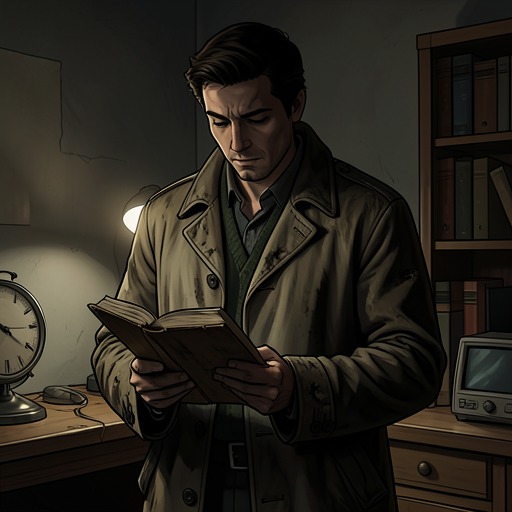
When Rains detective submitted the report, [Daeshim](entity:character-recall-character-daeshim-6ef07abf5b8d) saw Nyia's photo in the magazine "[Diners and Dives](entity:object-recall-object-diners-and-dives-cb1091a8a03f)." The photo introduced her as a waitress at [Chantel Fifty](entity:location-recall-location-chantel-fifty-34841a30f555) restaurant in [Durham](entity:location-recall-location-3377c6b704f9), providing the specific clue that had been missing for eight years. This discovery transformed regret into hope
two days after the magazine discovery
Ricky Grants Permission
[Daeshim](entity:character-recall-character-daeshim-6ef07abf5b8d) tells Ricky about Nyia and admits that he has spent eight years regretting the way he left her. Ricky urges him to stop postponing the confrontation and offers to cover the remaining forensic work.
Ricky’s intervention matters because Daeshim is still tempted to hide behind professional obligations. With the main evidence transferred and the investigation sufficiently advanced, Daeshim accepts that finding Nyia is a responsibility he owes both to her and to himself.
shortly after Ricky’s encouragement
Daeshim Drives to Durham
[Daeshim](entity:character-recall-character-daeshim-6ef07abf5b8d) packs clothes and toiletries, disposes of perishable food, and leaves [Charlotte](entity:location-recall-location-bae839e3f8e9) for [Durham](entity:location-recall-location-3377c6b704f9). He keeps the magazine with him and enters the address of [Chantel Fifty](entity:location-recall-location-chantel-fifty-34841a30f555) restaurant into his GPS, committing himself to finding Nyia even though he does not know how she will receive him
during Daeshim’s drive to Durham
Nyia’s Stormy Day
Nyia spends a day off with [Trey](entity:character-recall-character-trey-4bb5c11306ea), taking him to a park after weeks of work have prevented the outing. Dark skies and rain threaten the day, but Trey’s excitement briefly draws her out of the grief sparked by the paper gnome he made for his father.
The weather reflects Nyia’s unsettled emotional state. She has built a functioning life, yet the child’s longing for his father exposes how incomplete that life remains, especially when Trey asks questions and seeks experiences associated with a present father.
that afternoon at the park
Trey Defends His Father
[Trey](entity:character-recall-character-trey-4bb5c11306ea) fights another boy after the boy makes remarks about his father. Nyia is shocked because Trey is normally gentle, but he explains that he acted because he wanted to protect the father he knows only through her stories.
The incident reveals that [Daeshim](entity:character-recall-character-daeshim-6ef07abf5b8d)’s absence is not emotionally neutral for Trey. The child already feels loyalty toward his unknown father, while Nyia realizes that the missing relationship has begun to shape Trey’s behavior and sense of identity.
the next day
Daeshim Enters Chantel Fifty
[Daeshim](entity:character-recall-character-daeshim-6ef07abf5b8d) visits [Chantel Fifty](entity:location-recall-location-chantel-fifty-34841a30f555) restaurant and takes a table where he can observe the entire diner. [Kayla](entity:character-recall-character-kayla-33460f2ea995) serves him a meal, and he recognizes the establishment from the magazine, though Nyia is not working that shift. He asks Kayla whether Nyia works there and learns that she does
that evening at a nearby hotel
Daeshim Waits for Nyia
After leaving the diner, [Daeshim](entity:character-recall-character-daeshim-6ef07abf5b8d) calls Ricky to report that he has located Nyia but has not yet seen her. Ricky confirms that the forensic investigation has been handed over to detectives and reassures Daeshim that he will cover the work
the following morning
Nyia Brings Trey to Work
Julius unexpectedly travels out of town, leaving Nyia without her usual childcare. She calls [Chantel Daniels](entity:character-recall-character-chantel-daniels-587aa1bfd238), receives permission to bring [Trey](entity:character-recall-character-trey-4bb5c11306ea) to the diner, and arrives early to help [Cedric](entity:character-recall-character-cedric-fcd11bb1d0a2) prepare pies and dishes before opening.
The arrangement shows the mutual trust within Nyia’s workplace and places Trey in the very setting where [Daeshim](entity:character-recall-character-daeshim-6ef07abf5b8d) is likely to find them. Ordinary logistical pressure thus creates the circumstance for the story’s central reunion.
that morning during the busy shift
The Diner Reunion
[Daeshim](entity:character-recall-character-daeshim-6ef07abf5b8d) enters [Chantel Fifty](entity:location-recall-location-chantel-fifty-34841a30f555) restaurant while Nyia is working. [Trey](entity:character-recall-character-trey-4bb5c11306ea) sees him first, runs across the diner, and calls him "Daddy," causing Daeshim to realize immediately that the boy is his son. Nyia drops the plates in her hands and nearly collapses when she recognizes
immediately after the reunion
Nyia’s Anger and Grief
Chantel leads [Trey](entity:character-recall-character-trey-4bb5c11306ea) away while Nyia and [Daeshim](entity:character-recall-character-daeshim-6ef07abf5b8d) enter her office. Daeshim embraces her and apologizes, but Nyia strikes his chest and calls him a son of a bitch before collapsing into tears.
Her anger is inseparable from love. She has spent eight years carrying the consequences of his disappearance, and the physical rejection allows her to express the hurt that polite explanations could never contain. Daeshim accepts the punishment because he knows he caused it.
during the office conversation
Daeshim Explains the Separation
[Daeshim](entity:character-recall-character-daeshim-6ef07abf5b8d) tells Nyia that his parents forced him to end the relationship by threatening his education. He admits that he was a dependent, frightened student who chose obedience and disappeared rather than explain the ultimatum.
The explanation does not erase the damage, but it replaces Nyia’s belief that he simply stopped wanting her with the truth of his cowardice. Daeshim also says that he searched for her after graduation and failed to find her, reinforcing that the separation was not caused by indifference.
during the office conversation
Trey’s Paternity Revealed
Nyia explains that she did not know she was pregnant when [Daeshim](entity:character-recall-character-daeshim-6ef07abf5b8d) left and that every attempt to contact him failed. She reveals that [Trey](entity:character-recall-character-trey-4bb5c11306ea) is eight years old and is Daeshim’s son.
Daeshim is devastated by the years he missed: the pregnancy, the birth, the first steps, and every other milestone. His grief proves that fatherhood is not an abstract claim for him; it is an immediate bond accompanied by remorse over the life he should have shared.
during the same conversation
Nyia Preserved Trey’s Heritage
Nyia tells [Daeshim](entity:character-recall-character-daeshim-6ef07abf5b8d) that she raised [Trey](entity:character-recall-character-trey-4bb5c11306ea) knowing about his father and [Korean heritage](entity:concept-recall-concept-korean-heritage-30b58f82394c). She learned and used Korean with him, hired tutoring, and made sure he could speak the language despite Daeshim’s absence.
Her choice prevents the separation from becoming a total erasure of Daeshim’s identity. It also demonstrates that Nyia’s anger never became a campaign against him; she protected Trey’s right to know where he came from even while she privately mourned the father who was missing.
at the end of the office conversation
The Second-Chance Kiss
Once the truth is spoken, [Daeshim](entity:character-recall-character-daeshim-6ef07abf5b8d) and Nyia kiss for the first time in eight years. Their physical connection returns with immediate force, but they stop before fully consummating it because [Trey](entity:character-recall-character-trey-4bb5c11306ea) is nearby and their reunion requires more than desire.
The kiss marks the emotional turning point. Nyia has not forgiven everything, yet she is willing to consider a future, while Daeshim understands that apology must be followed by sustained presence rather than a single dramatic return.
shortly after the office conversation
Trey Meets His Father
Nyia brings [Trey](entity:character-recall-character-trey-4bb5c11306ea) to meet [Daeshim](entity:character-recall-character-daeshim-6ef07abf5b8d) formally and cautions him to approach gently because Daeshim is frightened and inexperienced with children. Trey greets Daeshim in Korean, and Daeshim opens his arms only after Trey looks to Nyia for permission.
The boy’s embrace completes the reunion that began when he ran through the diner. Daeshim accepts both Nyia and Trey as the family he should have been present for, and he vows silently not to let either of them go again.
later that day
Daeshim Enters Their Home
[Daeshim](entity:character-recall-character-daeshim-6ef07abf5b8d) drives Nyia and [Trey](entity:character-recall-character-trey-4bb5c11306ea) to Nyia’s nearby home. He studies the family photographs, ultrasound images, and milestone pictures covering the walls, seeing a detailed record of the son’s life that he never witnessed.
The house makes the lost years visible. It also shows that Nyia built Trey a warm, stable world rather than allowing abandonment to define him, intensifying Daeshim’s gratitude and guilt as he steps into a domestic life that continued without him.
that evening at Nyia’s home
The Paper Gnome Gift
[Trey](entity:character-recall-character-trey-4bb5c11306ea) gives [Daeshim](entity:character-recall-character-daeshim-6ef07abf5b8d) the jagged paper gnome he made for his father. The word “Dad” is written across it, and Daeshim breaks down as he realizes that Trey had already imagined a relationship with him before they ever met.
The gift becomes a symbol of the family’s emotional bridge. Trey’s innocence makes the past both more painful and more forgivable, while Daeshim’s declaration of love confirms that he accepts fatherhood immediately and wholeheartedly.
that evening
Their First Family Dinner
Nyia prepares a quick meal, and the three of them sit together as a family for the first time. She tells [Daeshim](entity:character-recall-character-daeshim-6ef07abf5b8d) about the pregnancy, [Trey](entity:character-recall-character-trey-4bb5c11306ea)’s birth, and his childhood milestones, sharing photographs and videos so Daeshim can begin to recover what he missed.
The dinner gives Daeshim a glimpse of the ordinary family life he abandoned. His gratitude is mixed with pain, but the exchange also turns the past into shared knowledge rather than an unspoken absence.
that night
The Lovers Reunite
After [Trey](entity:character-recall-character-trey-4bb5c11306ea) goes to bed, Nyia challenges [Daeshim](entity:character-recall-character-daeshim-6ef07abf5b8d) to decide what he will do with the second chance before them. He responds by kissing her and carrying her upstairs, where their long-suppressed sexual relationship resumes.
Their intimacy is passionate and deliberately restorative: it acknowledges that the bond survived the separation while giving them a private space to reclaim one another. They fall asleep together afterward, with Daeshim deciding that he will remain with Nyia and Trey.
the next morning
Morning Fatherhood
[Trey](entity:character-recall-character-trey-4bb5c11306ea) wakes Nyia and [Daeshim](entity:character-recall-character-daeshim-6ef07abf5b8d) early, demanding that they join him. Daeshim responds by photographing their new family life and announcing that he will show the images to his parents so they can see what their prejudice cost him.
His decision to confront his parents represents a reversal of the cowardice that caused the separation. Nyia encourages him to enjoy the present, but Daeshim makes clear that he will no longer sacrifice his family to preserve their approval.
one month after the reunion
The Move Back to Durham
[Daeshim](entity:character-recall-character-daeshim-6ef07abf5b8d) completes the paperwork needed to transfer from the [Charlotte](entity:location-recall-location-bae839e3f8e9) police station to a position in [Durham](entity:location-recall-location-3377c6b704f9). He spends another two weeks moving his belongings, selling or giving away what he no longer needs, and making the relocation permanent.
The move converts his emotional promise into a material commitment. He is no longer visiting Nyia and [Trey](entity:character-recall-character-trey-4bb5c11306ea) as a returning lover and newly discovered father; he is restructuring his career and home around the family he intends to keep.
after Daeshim settles in Durham
Ricky and Tish Welcome Them
[Daeshim](entity:character-recall-character-daeshim-6ef07abf5b8d) introduces Nyia and [Trey](entity:character-recall-character-trey-4bb5c11306ea) to [Ricky Graham](entity:character-recall-character-ricky-graham-1a51b7753377) and [Tish](entity:character-recall-character-tish-b9050ff82816). The couple welcomes them warmly and looks forward to seeing Trey again when they visit [Charlotte](entity:location-recall-location-bae839e3f8e9).
Their acceptance broadens the family network around Nyia, Daeshim, and Trey. Ricky’s earlier support is also fulfilled: he helped Daeshim leave the investigation to pursue Nyia, and now witnesses the life his friend finally chose.
a few days after Daeshim sends the photographs
The Kwon Parents Visit
[Daeshim](entity:character-recall-character-daeshim-6ef07abf5b8d)’s parents call repeatedly after receiving his message and eventually arrange to visit and meet [Trey](entity:character-recall-character-trey-4bb5c11306ea). During the conversation, his father questions whether Trey is truly Daeshim’s son, prompting Daeshim to answer firmly that the boy is his.
The visit forces the Kwon family to confront the tangible consequences of their earlier prohibition against the interracial relationship. Daeshim refuses to let their doubts or old prejudices dictate his identity as a father.
during the Kwon parents’ first call
Nyia Addresses the Grandparents
[Daeshim](entity:character-recall-character-daeshim-6ef07abf5b8d) passes the phone to Nyia, who speaks to Kwon couple in Korean. She assures them that she has never spoken badly about Daeshim to [Trey](entity:character-recall-character-trey-4bb5c11306ea) and that their son has always known about his father and Korean culture
later in the same conversation
Trey Welcomes His Grandparents
[Trey](entity:character-recall-character-trey-4bb5c11306ea) speaks with Kwon couple in Korean and learns that they plan to visit. He is initially cautious but soon becomes excited, and he tells Nyia that his grandparents are coming. The child's enthusiasm signals a possible reconciliation between the separated branches of his family. Unlike the adults, Trey approaches the
near the ending
A Family of Four
Over the following weeks, Nyia and [Daeshim](entity:character-recall-character-daeshim-6ef07abf5b8d) learn how to live together after years of independence and separation. Julius continues helping with [Trey](entity:character-recall-character-trey-4bb5c11306ea), Chantel remains supportive, and Daeshim assumes the practical responsibilities of fatherhood while rebuilding intimacy with Nyia.
Old hurts occasionally resurface, but honesty replaces the secrecy that destroyed their first relationship. Nyia realizes she is pregnant again, suggesting that the restored family will soon expand from three members to four and giving their second chance a hopeful future.